
What to Know About Fireplace Insert Installation

Many homeowners start thinking about fireplace insert installation after a frustrating winter evening when the fireplace looks beautiful but the room still feels chilly. Others are tired of dealing with smoke entering the room, a drafty old masonry fireplace, or a fireplace that simply doesn't get used because it isn't practical. Those are common situations in older Ozarks homes, lake houses, and seasonal properties where the original fireplace has plenty of character but doesn't provide the comfort or efficiency homeowners expect today.
A fireplace insert can be a smart upgrade, but the installation itself is where many of the most important decisions happen. The right insert has to fit the home, the fireplace opening, the chimney, the fuel type, and the way your family actually plans to use it. When those pieces come together, you get better performance, improved comfort, and a system installed with safety, efficiency, and long-term serviceability in mind.
What fireplace insert installation really involves
From a homeowner's perspective, an insert slides into an existing fireplace and provides a cleaner, more efficient heating appliance. From the installer's perspective, it involves much more than placing a box into an opening.
A proper installation begins by evaluating the existing fireplace and chimney system, confirming clearances, checking the condition of the flue, and matching the appliance to the venting requirements specified by the manufacturer.
That matters because the original masonry fireplace was designed as one complete system, while the new insert operates as another. Wood inserts, gas inserts, and pellet inserts all vent differently. They also produce different heat patterns, require different electrical or gas connections, and place different demands on the chimney.
In many homes, the visible part of the project is actually the easiest. The less visible work—liner selection, vent routing, termination details, surround fit, hearth protection, and code-compliant clearances—is what determines whether the finished system performs the way it should.
Why the chimney inspection comes first
Before recommending fireplace insert installation, a qualified professional should inspect the existing fireplace and chimney. This is not simply checking a box. It is how you determine whether the structure is sound, whether the flue is suitable for relining, and whether hidden issues could affect the success of the project.
NFPA 211, the nationally recognized standard for chimneys, fireplaces, vents, and solid fuel-burning appliances, provides the framework for evaluating these systems. In simple terms, that means installation decisions should be based on recognized safety standards rather than guesswork. If the home has a history of water intrusion, cracked flue tiles, smoke problems, deteriorated masonry, or an unknown service history, those details matter.
In the Ozarks, this step is especially important. Heavy rainfall, humidity, and freeze-thaw cycles can take a toll on masonry chimneys. A fireplace may appear perfectly fine from the living room while the flue liner, smoke chamber, crown, or exterior brickwork tells a very different story. Vacation homes and second homes add another layer since systems often sit unused for months at a time.
We've inspected fireplaces that looked perfectly serviceable from inside the home, only to discover deteriorated flue tiles, missing chimney caps, water damage above the roofline, or hidden masonry defects during the inspection. Identifying those issues before installation helps prevent costly surprises later and ensures the new insert is installed on a solid, dependable foundation.
Choosing the right insert for the home
Not every fireplace is a good candidate for every insert. That is one reason homeowners often receive conflicting advice when they begin shopping before the fireplace and chimney have been properly evaluated.
A wood-burning insert is often an excellent choice for homeowners who want the look and feel of a real wood fire while dramatically improving heating performance over an open fireplace. These appliances typically require a properly sized stainless steel liner connected from the insert to the top of the chimney. The liner is a critical part of the system because it improves draft, properly manages flue gases, and matches the appliance to the venting system it was engineered to use.
Wood inserts can provide excellent supplemental heat, but they are not maintenance-free. Homeowners still need to burn properly seasoned firewood, schedule regular chimney sweeping, and have the system inspected periodically. For full-time residences, that tradeoff often makes perfect sense. For occasional-use cabins or vacation homes, the best choice depends on how often the system will realistically be used and maintained.
Gas inserts remain one of the most popular upgrades because they provide convenience, dependable heat, and simple operation. For many homeowners—especially those updating a primary living area or a second home—a gas insert offers an outstanding balance of comfort, efficiency, and ease of use.
These systems typically vent through listed direct-vent systems or co-linear liners depending on the appliance and fireplace configuration.
Gas supply, electrical requirements, ignition type, and venting layout all influence the installation plan. A gas insert can create a beautiful finished fireplace, but only when the existing fireplace dimensions and chimney are compatible with the selected appliance.
Pellet inserts
Pellet inserts can be an excellent option for homeowners looking for controlled heat output and efficient fuel use. However, they come with their own venting requirements, electrical needs, cleaning schedule, and fuel storage considerations. In some homes they are an ideal fit. In others, a wood or gas insert may better match the homeowner's lifestyle.
Fireplace insert installation and venting
One of the biggest misconceptions is that an existing chimney can simply be reused without modification. In most cases, that is not how a professional installation works.
Why liners matter

For many fireplace insert installations, a new stainless steel liner or listed venting system isn't simply an upgrade—it's a required part of installing the appliance according to the manufacturer's instructions. Proper vent sizing helps the insert draft correctly, improves efficiency, promotes cleaner combustion, and safely carries combustion byproducts out of the home. It's one of the most important parts of the entire installation, even though homeowners rarely see it once the project is complete.
If the chimney has damage, improper sizing, or deterioration, those issues need to be addressed before or during installation.
This is also where experience matters. A technician trained through organizations such as the Chimney Safety Institute of America (CSIA) and the National Fireplace Institute (NFI) is not simply collecting certifications. That education helps technicians interpret standards, follow manufacturer requirements, and recognize field conditions that could affect safety and performance.
For homeowners, the benefit is simple: fewer assumptions, better workmanship, and greater confidence that the insert will perform exactly as it was designed.
Existing fireplace condition still matters
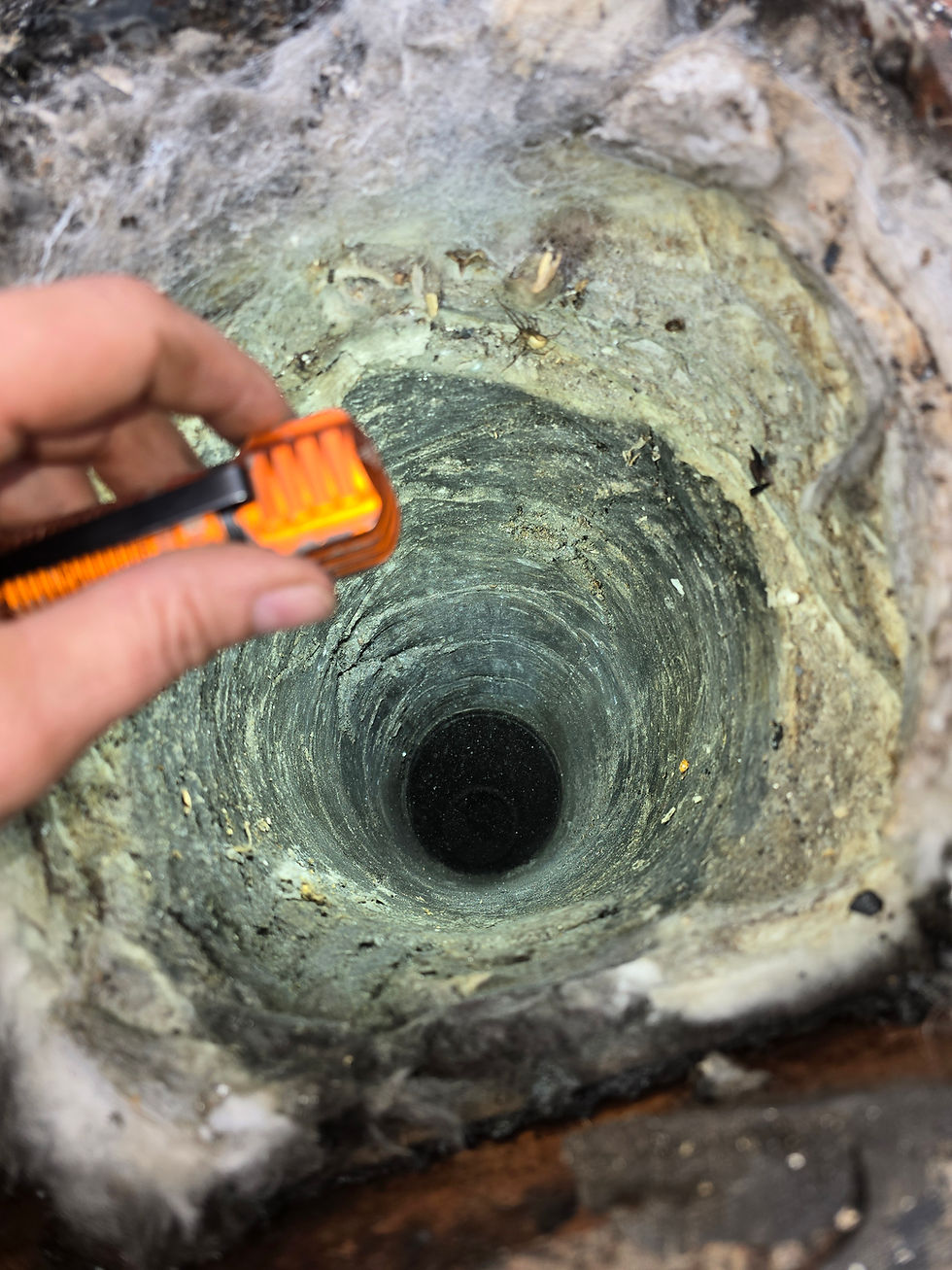
Even though the insert becomes the new heating appliance, the original fireplace structure still matters. Damaged smoke chambers, water-deteriorated masonry, settlement cracks, or a deteriorated chimney crown can all affect the long-term success of the installation. Sometimes the best path is a straightforward installation. Other times, repairing part of the chimney first is the better long-term investment.
During our inspections, we also evaluate components many homeowners never think about, including the smoke chamber, damper area, chimney crown, flashing, and chimney cap. Addressing problems in these areas before installing a new insert helps protect your investment and can prevent water intrusion or venting problems from affecting the new appliance in the future.
That isn't upselling when it's based on inspection findings—it's simply good planning.
Common questions homeowners have
One of the most common questions is whether an insert will actually heat the room better.
In most cases, yes.
Traditional open fireplaces are often inefficient because much of the heat escapes up the chimney, and some even pull heated air out of the home. Modern inserts are designed to burn or operate much more efficiently, delivering significantly more usable heat into the living space.
Another common question is whether the existing hearth and surround can remain. Sometimes they can. Other times, dimensions, clearances, or the condition of surrounding materials require modifications. The answer depends on both the selected appliance and the condition of the existing fireplace.
Homeowners also ask whether installation is possible in an older masonry fireplace that has seen better days. Often it is, but the chimney's condition must be evaluated first. In some cases, restoration work may be recommended before installation. Companies that stay active in continuing education through organizations like the National Chimney Sweep Guild (NCSG) and the Hearth, Patio & Barbecue Association (HPBA) are often better prepared for these more challenging projects because they stay current on products, venting methods, installation techniques, and industry best practices.
What a good installation process looks like

A good installation starts by listening.
Some homeowners want dependable supplemental heat. Others want the convenience of gas for a lake home they don't visit every week. Others simply want to modernize the appearance of an outdated fireplace while improving comfort and efficiency.
From there, the project should move through inspection, careful measurement, appliance selection, venting design, and installation planning in a logical order. If repairs are needed first, those recommendations should be explained clearly. If multiple good options exist, the homeowner should understand the advantages and tradeoffs of each.
That approach almost always leads to better long-term results than choosing an appliance first and trying to make it fit afterward.
For homeowners throughout Southwest Missouri and Northwest Arkansas, it also helps to work with a company that understands local construction methods and the unique wear caused by Ozarks weather. Moisture exposure, seasonal use, and deferred maintenance are common factors throughout our service area. An insert installation that looks great on day one is only part of the goal. The real objective is a fireplace system that continues to vent properly, heat efficiently, and perform reliably for many years.
At Lakeside Chimney, every fireplace insert installation begins with understanding how you want to use your fireplace. Some homeowners are looking for dependable supplemental heat, while others want the convenience of gas or the beauty of a new centerpiece for their living room. Our job is to recommend the solution that best fits your home, your chimney, and your goals—not simply sell a particular appliance.
If you're considering a fireplace insert, think of the project as an upgrade to your entire fireplace system rather than simply replacing what's inside the fireplace opening. A properly planned installation, combined with a thorough chimney inspection and a quality venting system, delivers better performance, greater efficiency, and the confidence that your fireplace is ready to be enjoyed for years to come.
Comments