
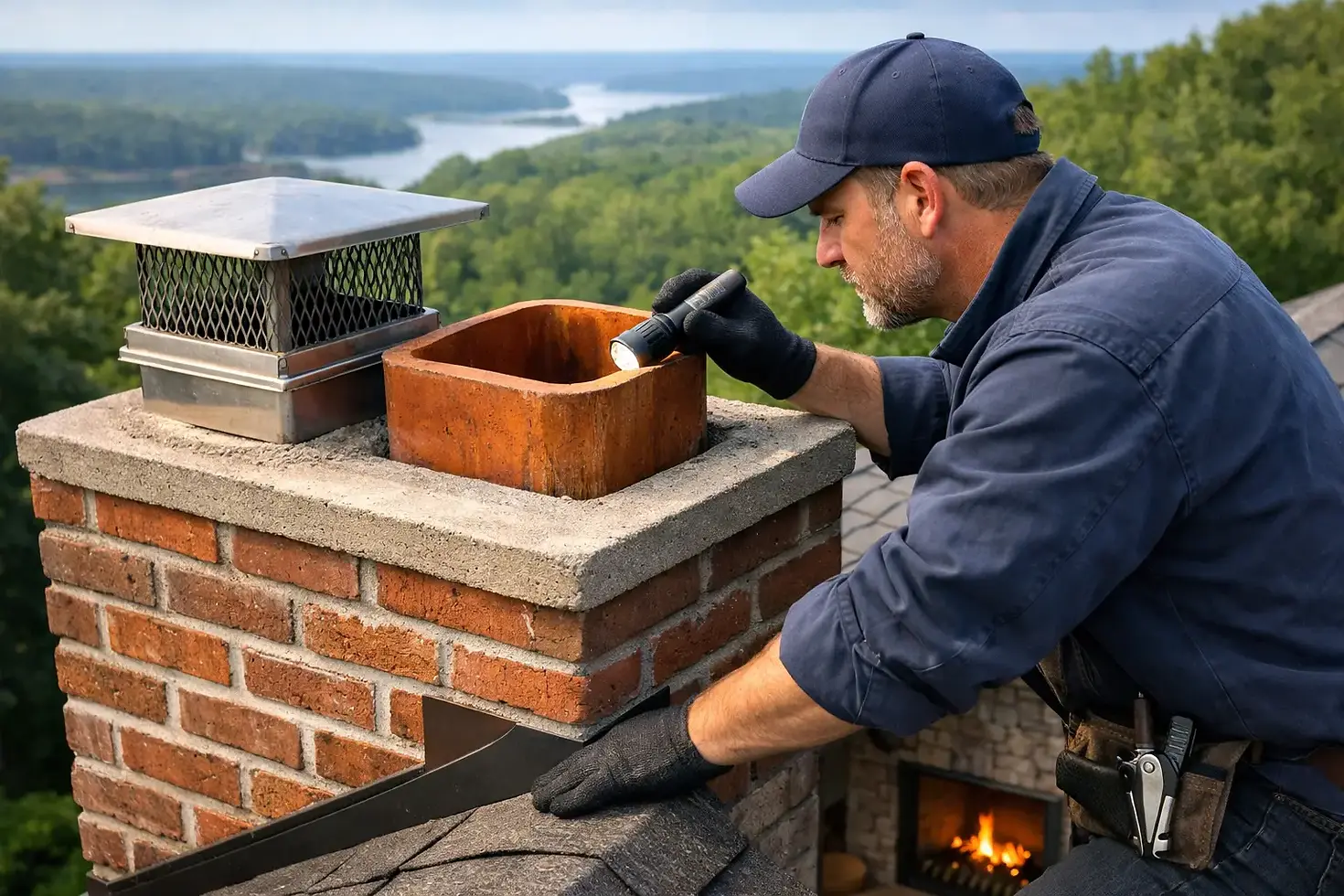
Why an Annual Chimney Inspection Matters

That first cool evening when you light the fireplace is not the best time to find out something changed inside the chimney over the summer. A bird may have nested in the flue, rain may have worked its way into the masonry, or a small liner issue may have become a larger venting problem. That is why an annual chimney inspection is less about checking a box and more about making sure the system still works as safely as you believe it does.
For many homeowners in Southwest Missouri and Northwest Arkansas, that matters more than it might in milder, drier climates. In the Ozarks, chimneys deal with heavy rain, humidity, freeze-thaw cycles, and long stretches when a vacation home or lake property may sit unused. Those conditions can quietly affect masonry, metal components, caps, crowns, flashing, and flue liners. By the time a problem becomes obvious in the living room, the damage has often been there for a while.
What an annual chimney inspection is really checking
A chimney inspection is not just a quick look down the flue. A proper inspection evaluates the visible and accessible parts of the chimney and venting system to determine whether it is suitable for continued use. That includes looking for buildup, blockages, deterioration, water entry, damaged components, and signs that the fireplace or appliance is not venting the way it should.
The standard most homeowners hear about is NFPA 211, which is the nationally recognized standard for chimneys, fireplaces, vents, and solid fuel-burning appliances. It outlines different inspection levels based on the situation. For a system that has not been changed and is being used in the same way as before, a Level 1 inspection is typically the baseline annual evaluation. If there has been a change in appliance type, a system malfunction, a chimney fire, or a real estate transaction, a Level 2 inspection may be more appropriate because it is more detailed and includes examination of interior flue surfaces by video scanning.
That distinction matters because not every chimney needs the same level of inspection every year. Honest guidance means recommending the inspection level that fits the conditions, not automatically pushing the most involved option.
Why annual chimney inspection catches problems early
Most chimney issues do not begin as dramatic failures. They start small. Mortar joints begin to open. A crown develops cracks. A metal chase cover starts to rust through. A flue liner joint separates. A cap loosens. Creosote accumulates more quickly because of short, smoldering fires or marginal draft. None of those problems necessarily announce themselves right away.
An annual chimney inspection gives you a chance to catch those changes while the repair options are usually simpler and more affordable. It also helps answer an important question homeowners often cannot answer on their own: is this cosmetic wear, routine maintenance, or a condition that affects safe operation?
That is especially valuable in homes around Table Rock Lake and throughout the surrounding hills, where weather exposure can be hard on exterior masonry. Water is one of the biggest factors in chimney deterioration. Once moisture gets into brick and mortar, freeze-thaw cycles can cause expansion, cracking, and spalling. A stain on the ceiling near a chimney or a musty fireplace odor in summer may seem minor, but they often point to moisture paths that deserve a closer look.
What gets looked at during a chimney inspection
A thorough inspection usually includes the firebox, smoke chamber, damper area, flue, appliance connector or stovepipe where applicable, chimney exterior, termination, and other accessible parts of the venting system. The goal is to understand how the whole system is performing, not just one isolated part.
Inside the fireplace, the inspector may look for cracked firebrick, deteriorated mortar joints, damper problems, or smoke chamber defects that can affect draft and heat transfer. In the flue, they are checking for creosote buildup, obstructions, liner damage, and signs of improper venting. On the exterior, they are often evaluating brickwork, mortar, crowns, caps, flashing, and evidence of water intrusion.
For wood-burning systems, creosote is a common concern, but it is not the only one. Gas fireplaces and gas log systems still need venting evaluation. People sometimes assume gas means maintenance-free, but venting systems can still develop blockages, corrosion, liner issues, or termination problems. Pellet appliances and factory-built fireplaces also have inspection needs that differ from older masonry fireplaces.
Why certifications and training matter to homeowners
When someone evaluates a chimney, you want more than a flashlight and a guess. You want a technician who understands how different systems are built, how they fail, and which conditions are actual safety concerns versus normal aging.
That is where certifications and continuing education become useful to the homeowner. A Chimney Safety Institute of America, or CSIA, certified professional has been tested on inspection, maintenance, and safety principles. A National Fireplace Institute, or NFI, credential shows training related to hearth appliances and venting. Ongoing involvement with organizations like the National Chimney Sweep Guild and the Hearth, Patio & Barbecue Association helps professionals stay current as products, standards, and best practices evolve.
For the homeowner, that translates into better explanations, more accurate diagnosis, and recommendations that are grounded in nationally recognized standards and manufacturer requirements rather than opinion. It also means a better chance of hearing, "This needs attention," when that is true, and "This can be monitored," when that is the more appropriate answer.
Annual chimney inspection for seasonal and second homes
If you own a lake house, cabin, or vacation property, annual inspections are even more useful than many people realize. A chimney can go months without anyone noticing that animals entered the flue, wind-driven rain found a weakness at the top, or moisture began affecting the masonry.
Seasonal homes also tend to have a different pattern of use. When people arrive for a holiday weekend, they may build hotter fires than usual, use the fireplace several nights in a row, or operate a system that has been idle for months. That kind of stop-and-start use makes it smart to verify that everything is still in good working order before the season begins.
In practice, many chimney issues at second homes are not dramatic. They are things like rusted dampers, water stains near the chimney breast, missing caps, deteriorated mortar, and liner damage that no one could have seen from the living room. An inspection brings those hidden conditions into the open so you can make a calm, informed decision.
What happens if problems are found
A good inspection should leave you with clarity, not confusion. If an issue is found, the next step depends on what kind of defect it is and how it affects use of the system.
Some conditions call for maintenance, such as sweeping to remove combustible deposits or replacing a cap to keep out rain and animals. Some call for repair, such as crown repair, flashing correction, masonry tuckpointing, smoke chamber restoration, or flue liner repair. In other cases, the best path may be more significant restoration if the liner or structure is too deteriorated for spot repair alone.
There is rarely just one possible solution. For example, a damaged liner may be addressed with a listed relining system, and in some chimneys a restoration option may be appropriate depending on the chimney’s construction and condition. The right recommendation comes from inspection and diagnosis first. That approach helps homeowners weigh safety, longevity, and budget without being pushed toward work they do not need.
When to schedule your annual chimney inspection
Most homeowners do best by scheduling before the busy burn season starts. Late summer and early fall are common choices because they give you time to address any cleaning, maintenance, or repairs before colder weather arrives. But if you use your fireplace heavily, recently bought a home, changed appliances, noticed an odor or leak, or had storm-related concerns, waiting for the usual season may not make sense.
A lot of people are surprised to learn that a chimney can look fine from the yard and still have issues inside the flue. Others assume a system must be safe because it worked last winter. Sometimes that is true. Sometimes one wet season in the Ozarks is enough to change the picture.
For homeowners who want straightforward answers, an annual chimney inspection is one of the simplest ways to protect both the home and the places where people gather. Done properly, it is not about creating worry. It is about confirming that your fireplace, stove, or venting system is ready to serve you well for another season.
Comments